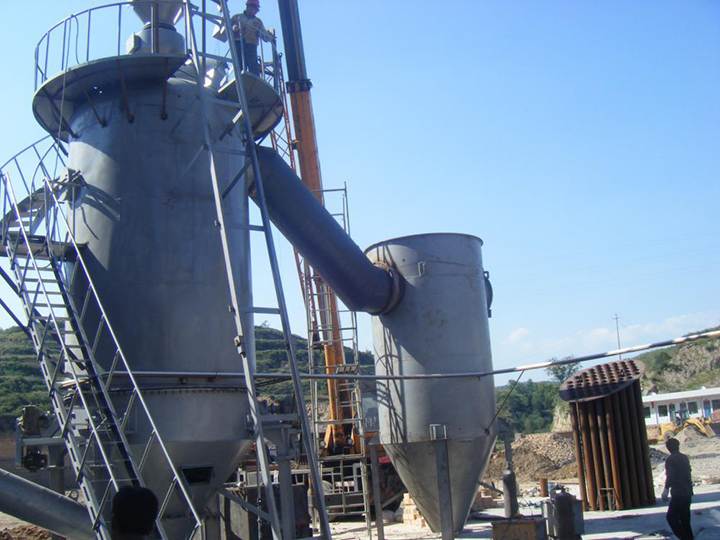
The furnace surface crackling of the gas generator mainly forms a mixture containing gas and air in the furnace surface space, and the proportion of this mixed gas has reached the explosion limit range (the proportion of gas in the mixed gas is between 12.5 and 75%). When the furnace surface temperature is high, (such as reaching 620-630°C), the furnace surface cracking phenomenon will occur, and firing is an explosion phenomenon. There are generally the following reasons for firing on the stove:
1、 Most of the furnace surface blasting is after a wind tunnel is formed in a local area of the material layer. The air drives straight into the furnace surface without gasification reaction, and mixes with the gas generated in other normal working conditions areas to produce gas mixture and explosion.
2. Due to the deviation of the generator furnace, the coal seam in some areas is very thin, the reaction between the gasification agent and the coal is incomplete, and a large amount of unreacted air escapes to the furnace surface, causing blasting.
3. Local areas burn out, that is, the amount of coal added for a period of time is insufficient, resulting in no coal seam in this local area, and the gasification agent escapes to the furnace surface without reaction, causing blasting.
4. The temperature of the material layer in some areas is very low, and the oxidation-reduction reaction cannot occur in this area, so the reaction of the gasification agent is incomplete, and the unreacted air escapes to the furnace surface, causing fire.
5. There is water leakage in the furnace body of the stirring rod of the generator, resulting in local areas not being gasified, and air reaching the furnace surface, causing fire.
6. When the furnace is in hot standby, open the fire detection hole. Due to the negative pressure in the furnace, air will be sucked into the fire detection hole, causing fire.