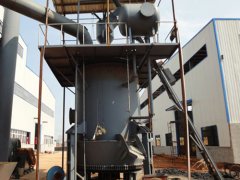
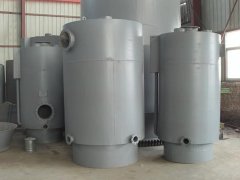
The fire in the skirt flange of the gas generator is the result of the fire layer falling or even extremely falling.
Causes of furnace skirt flange flashover
1 Originally, the skirt of the gas generator is a layer of ash and slag, which acts as a preheater when the gasifying agent passes through. When the fire layer drops, the gasifying agent and coal undergo an oxidation-reduction reaction to generate gas and generate heat. A large amount of accumulation accumulates, the temperature rises, the flange made of steel plates deforms, gaps appear, and the gas leaks. When it comes into contact with the air, a flame is formed, that is, a flashover phenomenon occurs.
2. When there is a fire in the gas generator skirt flange, the water in the generator ash tray will drop quickly due to high temperature evaporation and the water temperature will rise.
3 There will be a popping sound of slag at the place where the fire breaks out.
What should I do if there is a fire in the skirt flange of the gas generator?
When a fire breaks out in the furnace skirt flange, the saturation temperature should be quickly increased to blow up the falling fire layer. When the fire layer moves upward, although there is air leakage, the leakage is air. During maintenance, welding repairs should be carried out. If there is a large area of air leakage at the joint surface of the flange and the furnace skirt, the filler should be re-added. The improved structure currently in use is to add refractory concrete on the inside of the water jacket and on the furnace skirt flange. This plays a certain role in preventing fire outbreaks caused by the decrease of the fire layer.