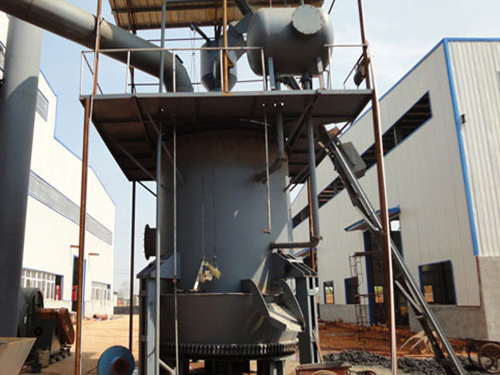
gas generatorCarbon content analysis of ash residue
The carbon content of ash and slag refers to the amount of ungasified coal components in the ash and slag discharged from the gas generator. The higher the carbon content of ash and slag, the more coal that has not been gasified, which is a waste of resources. It is generally believed that most of the ash in raw coal does not participate in the gasification reaction. In order to maintain the continuous stability of the gasification process, the ash must be continuously discharged out of the furnace.
The carbon content of the ash is due to the fact that the molten ash wraps the unreacted raw materials and cannot continue to contact the gasification agent to become carbon nuclei and is discharged out of the furnace together with the ash, which also causes a certain amount of energy loss. The carbon content of ash is related to the ash content of raw materials, ash properties, operating conditions and furnace structure. For solid-state slag discharge, the low melting point of the raw coal ash, the high ash content, the large amount of water vapor used in the gasification process, and the material layer moving too fast during the operation will lead to an increase in the carbon content in the discharged ash.
The carbon content of ash and slag is expressed as the mass percentage of carbon in the ash and slag. Generally, the carbon content of ash and slag discharged from a fixed bed gas generator is required to be less than 10%, preferably less than 5%.