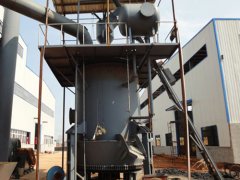
A gas generator is a device that converts coal into gas through air and steam. The water jacket, steam drum and other supporting equipment of the gas generator are special equipment involving safety and danger. In addition, its product, gas, is flammable, explosive and highly poisonous. Once an accident occurs, the consequences will be unimaginable. Therefore, during operation, we must strictly abide by the operating procedures, prohibit illegal operations, and conduct regular inspections carefully, handle and eliminate abnormal conditions in the operation of the gas generator in a timely manner, and ensure the long-term safe and stable operation of the gas generator.
Understanding the causes and treatment methods of abnormal operation of gas generators plays an important guiding role in analyzing and solving practical problems in production. In operation, the most common abnormal operations generally include hot operation, cold operation and partial operation.
1. Hot operation: In the actual operation of the gas generator, abnormal conditions such as hot operation are absolutely not allowed. The main characteristic of this situation is that the gas furnace outlet temperature is as high as 600°C or above, which has reached the temperature of gas spontaneous combustion, which is very dangerous. If Open the probe hole, the furnace will be bright red, and the emerging gas will spontaneously ignite and burn. The gasification layer in the furnace will be seriously slagging, and it will easily burn out if the solder is burned. At this time, the gas component has a high carbon dioxide content and a low carbon monoxide content, which seriously affects the gas quality and the kiln temperature drops sharply. Reasons for thermal operation: the ash layer is too high, the total coal layer is too low, the fire layer moves up, and there is almost no reduction layer and retort drying layer, turning it into a furnace. In this case, it is necessary to speed up the ash removal, speed up the coal feeding, increase the amount of steam at the bottom of the furnace, and use a drill to break the slag blocks until normal. Processing heat operations consumes a lot of energy and is very harmful to production.
2. Cold operation: The furnace outlet temperature has always been lower than 400°C. The inside of the furnace is black when viewed from the fire detection hole. There is no fire layer in the furnace. The CO and hydrogen content in the gas are very low, but the moisture content is high. Reasons for cold operation: The saturation temperature is too high. Due to the excess saturated steam, the temperature of the oxide layer drops. The water vapor cannot be decomposed in the oxide layer, and there is not enough temperature for the reduction reaction, let alone the synthesis reaction with the carbon, which causes the gas to deteriorate and waste energy. In this case, the saturation temperature should be lowered to reduce the amount of steam entering the furnace, increase the temperature of the oxide layer, and use a drill to drill holes to ventilate and speed up the gasification.
3. Partial operation: Characteristics of partial operation: the oxide layer in the furnace burns and does not burn at the same time. When burning, it is found that the solder burns red and black, and vaporizes slowly and turns black. The main reasons for partial operation are: local slagging in the furnace. Due to the strong fire on one side during operation, the molten slag is not processed in time. When the ash is discharged, ash falls smoothly on one side, but not on the side with slag, causing the ash layer to be too thick. In addition, because the ventilation resistance of the ash layer is less than the ventilation resistance of the coal seam, the air volume is too large. The fire in the oxide layer is strong and moves upward, and the ash layer is getting higher and higher. On the side with lower ash, due to the large wind resistance of the coal seam and the small air volume, the reaction is slow and the ash layer is getting thinner and thinner, resulting in severe partial burning. This is caused by uneven coal feeding, equipment installation and adjustment were not done well, and the coal blocks are of different sizes, with large pieces falling around and small pieces falling in the middle. No matter what the reason is for the eccentric operation, the slag blocks in the furnace must be broken up and removed, and more coal should be added to the burning side to make the furnace gradually operate normally.