The water jacket is an important component of the gas generator. Generallygas generatorThe furnace body is designed in the form of a water jacket, and some are also called water jacketed boilers. Its purpose is to prevent the slag of coal or ash from adhering to the furnace body during the chemical process and affecting the uniform decline of the material layer. Slag is easy to hang on the furnace wall made of refractory bricks, thereby corroding the refractory bricks and seriously affecting the life of the furnace. Steel plate jacketed boilers can avoid this. On the other hand, the water jacket can also reduce the outward heat radiation from the furnace and produce low-pressure steam as a by-product for gasification agent.
In order to maintain the normal water circulation of the jacketed boiler, a steam drum (also called a steam collector) is generally installed on the furnace surface, and is equipped with a water level meter, water inlet device, safety valve, steam outlet pipe, etc. Generally, various automatic water inlet devices are often used to supply water to the drum of large gas furnaces to maintain the stability of the water level in the drum.
According to the needs of production, most jacketed boilers currently operate at low pressure, with a working pressure of 0.5-0.7 kg/cm2, and almost all the steam they generate is used for furnace bottom gasification. Some generator jacketed boilers set the working pressure at 2-3 kg/cm2, and the purpose is to make the generator self-sufficient in steam. In addition to supplying furnace bottom gasification, part of the steam is also used for fire detection hole steam sealing.ΦThe 1.5-meter B-type furnace can already do this.
-
-
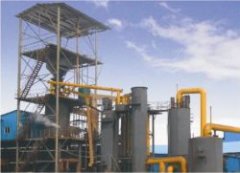
Two-stage gas generator
-
-
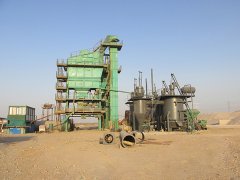
Coal-to-gas furnace for mixing station
The steam output of jacketed boilers is generally estimated as 25 kilograms/hour of steam produced per meter 2 of heat for large gas furnaces. For example, for a general 3-meter type II furnace, the water jacket heating area is 16 meters 2, and it is estimated that it can produce 400 kilograms of steam per hour. The small gas stove can be estimated as 10 kg/hour per meter 2, such asΦA 1.5-meter B-type furnace with a water jacket heating area of 20 meters can produce by-product steam of about 200 kilograms per hour.
The height and width of the water jacket are often different for different gas furnaces. In the past, large gas stoves often used semi-water jackets, whose height was limited to the fuel layer and whose width was 500 mm. Nowadays, many gas stations have removed the refractory bricks on the upper and top parts of the original furnace body and replaced them with a fully water-jacketed structure for the convenience of inspection and maintenance. Generally, for safety and manufacturing convenience, the furnace top is changed to a water cooling jacket and is not connected to the furnace body water jacket.
There are also many types of water jackets for small gas stoves. Generally, for the convenience of manufacturing, a full water jacket structure is adopted.
In addition, it should be pointed out that the narrow water jacket of the water-cooled W-G furnace has a width of only 75 mm. Under normal pressure, the steam evaporated from the water surface is directly taken away by the blast air. The saturation temperature is adjusted by the water supply of the water jacket, and the water level is guaranteed by the overflow.
Due to the narrow width of the water jacket, cleaning is not very convenient. Most gas generators are equipped with softened water equipment. Now there are a variety of softened water equipment for gas generators to choose from. There are also regular descaling based on water quality to ensure the normal operation of the water jacketed boiler.