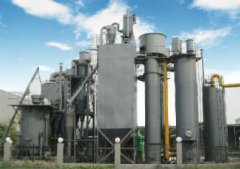
Coal-to-gas is a technology that uses materials containing carbon nitrogen and carbon dioxide such as coal or coke as raw materials, and uses air and water vapor as gasification agents to obtain combustible gas through gasification in an atmospheric fixed bed furnace. The generated gas components are carbon monoxide and hydrogen, and the combustible components are carbon monoxide and hydrogen. Since it contains a large amount of inert component nitrogen, the calorific value of coal gas is not high, and the low calorific value is about 6KJ/NM. There are two types of gas generator gas production technology: cold gas and hot gas. Different fuel gases can be selected according to the nature of the product. Hot gas can be used to heat products that do not require fuel cleanliness. For heating products that require fuel cleanliness, the produced gas can be purified into silent cold gas. Cold gas has low dust content and harmful components and will not pollute the products, so it is burned with an open flame. Traditional coal combustion makes it difficult to control the temperature of the kiln. It often happens that the temperature cannot be raised or lowered. For heating products using cold gas and hot gas, for example, to adjust the remote temperature, you only need to adjust the opening of the gas generator and damper, which is very simple and has obvious effects on improving product quality, improving product production technology, improving working conditions and environmental sanitation.