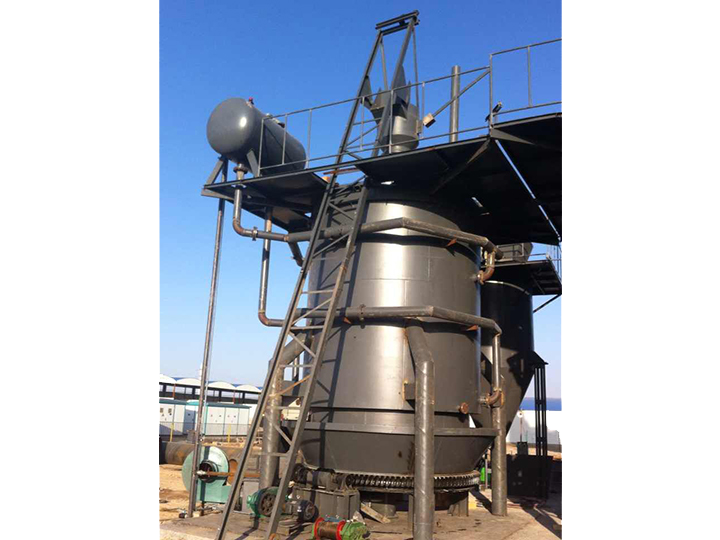
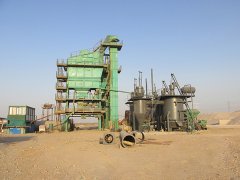
In the production of synthetic ammonia, it is necessary to prepare feed gas with a hydrogen-to-nitrogen ratio of 3:1. In small and medium-sized nitrogen fertilizer plants, most use air and steam as gasification agents, which are intermittently introduced into a fixed-layer gas furnace to react with hot charcoal to produce semi-water gas.
When producing semi-water gas by the intermittent method, air and steam are fed alternately. The period from the last time air is fed to the next time air is fed is called a working cycle. Each working cycle includes five stages: blowing, blowing up, blowing down, blowing twice, and blowing clean. In summary, it can be divided into two stages: blowing and making.
① Blowing stage: Air is blown from the bottom of the furnace from bottom to top to increase the temperature of the coal seam, and then the blowing air is released after recovering the heat. In order to recycle the reaction heat of CO in the blowing air, the blowing air is sent into the fuel chamber, and an appropriate amount of air is added to burn with carbon monoxide to release heat and store it in the heat storage bricks in the fuel chamber. The blowing air is released from the chimney.
② Primary upward gas blowing stage: water vapor is sent from bottom to top into the coal seam for gasification reaction. At this time, the temperature of the lower part of the coal seam decreases, while the temperature of the upper part increases, and the sensible heat taken away by the gas increases. The main purpose of adding air to steam in the gas production stage is to obtain nitrogen and semi-water gas, so it is called nitrogen-added air.
③ Downward blowing stage: water vapor is blown into the coal seam from top to bottom to continue the gasification reaction, making the temperature of the coal seam uniform, and the produced gas is led out of the furnace bottom system. The gasification layer moves upward, the temperature of the upper part of the gas furnace increases, and the sensible heat loss taken away by the gas increases. Therefore, after the upper blowing stage, the air flow direction must be changed.
④ Secondary upward gas blowing stage: The temperature of the coal seam has dropped significantly after the gas is blown under steam, and there is still gas in the furnace. If air is blown in immediately, an explosion will inevitably occur. To this end, a second upward blow with steam is performed to drain the gas from the bottom of the furnace and create conditions for the next step of blowing.
⑤ Air blowing stage: The purpose is to recover the residual gas existing in the upper part of the furnace and in the pipes. This part of the blowing gas should be recovered as the source of N2 in the semi-water gas. After the second upward blow, if the semi-water gas in the upper space of the gas furnace and the pipe is emptied immediately as it enters the blowing stage, not only will the semi-water gas be lost, but the semi-water gas will mix with the air when it is discharged from the chimney, and may cause an explosion when it encounters sparks.
Therefore, before switching to blowing, air is blown from the bottom of the furnace, and the generated air gas and the original residual semi-water gas are sent to the gas cabinet for recovery. Then switch to the blowing stage and repeat the cycle.